Friday, July 10, 2015

NBNC>NY July 2015


Upstate FHRvers
As sometimes happens the stars align and we find ourselves in the same zip code as other Harborites; in this case we met up with Dave and Polly Brown and Art and Karen Pethybridge (listed in alphabetical order so as not to minimize each couple) although it was great to share hugs with Karen and Polly and Polly and Karen! The Brown’s trekked from their native region of Adams NY, where they parked their motor home and will be (have by this posting) returned to NBNC to get back to the boating life. Art and Karen followed the Seaway Trail to Oswego from their recent journey to Ottawa. 


olympian 10
We all met at Rudy’s Lakeside in Oswego, where the very best haddock and clams can be found. Rudy’s is a 60+ year old landmark on the shore of Lake Ontario, fondly remembered in my youth as “The Loop”.  After a wonderful afternoon of visiting, eating and continued visiting we parted company with Art and Karen knowing that we would be seeing them again this summer and joined Polly and Dave on an excursion to their neck of the woods in northern Jefferson County. 

We too traveled the Seaway Trail (rte 104) northbound and followed The Brown’s over the rivers and through the woods, stopping enroute to check out  a computerized dairy operation sitting on 1,500 acres with about 1,000+ holstein producers of top grade milk,  Hi Hope Farm, owned by Dave’s brother who recently passed away, is operated by Dave’s nieces and nephews.  

During our brief tour we were impressed with the machinations of the milking parlor. Once a chore that came at 4 am and 4 pm the dairy industry has joined the 21st century of technology where the bovine wears an ankle bracelet that reads her weight, vitals and amount of milk produced at any given time. Even her steps are recorded. It was an incredible operation to see. After ogling at mc-mansions along the Henderson Harbor coastline we bid adieu to Polly and Dave and will reunite with them during Octoberfest at the Harbor.


Good times continue with our fellow campers here at Mayfair. For July 4th we had an afternoon picnic sharing themed foods of red, white and blue. Imaginations took hold and the patriotic feast was thoroughly enjoyed.


Waiting for the din of the washing machine to complete its spin cycle and the endless tumbling of the dryer to suddenly stop to the silence of the room, I become swathed in warm towels as I fold clean, fresh laundry.  It doesn’t matter how far away from home you are there will always be dirty clothes to launder, floors to sweep, carpets to vacuum.  And so it is on this first day of July that a torrential storm hammered at the screen door and metal roof of the campground laundry room.  The skies darkened, the heavens grumbled and I became a prisoner of the laundry room. We have experienced consistent downpours, light, heavy, driving rains during these past four weeks.  I cast my eyes around the four-walled room to see if I might have the resources to begin building an ark. 

Could I put something together that would be seaworthy, I wondered. Two outdoor chairs, a floor stand fan, wood shelving, bedding sheets; if put together right I could float back to the campsite in style and keep my feet and laundry dry. And so I stared out the screen door while time lagged and puddles became lagoons. A slight break gave me hope as I began to gather baskets of folded clothes, now cold, to scuttle to the jeep a mere fifty feet away. Anyone who knows me knows that I am terrified of thunder and lightning. And so with trepidation I quietly opened the screen door with the hope the storm gods would not hear my apprehensive breathing or the squeak of the door hinge. I hesitated a few seconds too long because as I was two steps onto the yard a thunderous growl mushroomed across the dark clouds followed immediately with a clap of lightning. 

(not my photo)
(I wonder why they call it a clap of lightning. Who do you suppose would applaud a lightning storm, other than meteorologist Meredith.)  Back in the laundry room I peer out at the bleakness, my options are limited; Dave is off the reservation visiting with friends, I am a few feet from the jeep but my chickenish continues to hold me prisoner. The arc project is beginning to become a reality.  Ninety-four minutes later the layered clouds begin to lift, specks of sunshine touch the ground and I am getting up my nerve to combat my fears. Grabbing baskets, books, keys and phone I bravely crash out the screen door leaving its slamming echo in my wake, jumble key locks and clothes into the Jeep and courageously drive back to our campsite. Once inside and clothes put away and dry socks on my feet I am thankful 1. That clothes remained dry; 2. That it did not begin to rain again; and 3. That no one saw me as I talked myself into bravery.


not my photo


How long has it been since you have walked along a rural roadway?  Our campground is about five miles away from the maddening crowds of beachgoers and boaters in sylvan beach, so we can walk out of our campground and take pleasure in the panorama of a crayola box of greens as far as we can see. The heady scent of the countryside is a fusion of earthen loam with gentle winds weaving over cultivated rows of field corn not yet ready to silk, of a freshly oiled asphalt road, and the essence of summer heat pulling up from the earth remnants of dinosaur-like peat blended with wild foliage and flowers. 

not my photo
Take a second – go ahead, we’ll wait- can you see the fields swaying, and the butterflies winging lightly from flower to flower, can you smell the purity in the air, can you feel the sun’s warmth as you slowly close your eyes and stretch your face to the heat of sol and listen, ever so patiently, to the reverent sounds of summer in the country; birds chattering to one another, cows mooing, frogs ribbiting.  What could be more peace-filled. I wonder, could this be heaven.


Life is Short, Enjoy the Ride


Tuesday, June 23, 2015

NBNC>NY June 2015

These past few weeks we have adjusted quickly to our new and improved square footage of the motor home.  The passage in the corridor is more sizeable, the turning radius in the galley is more generous, stretching out on the couch while watching tv is more comfortable.  

All in all, it is great to have our wheeled-home fastened, secured, and patched up.

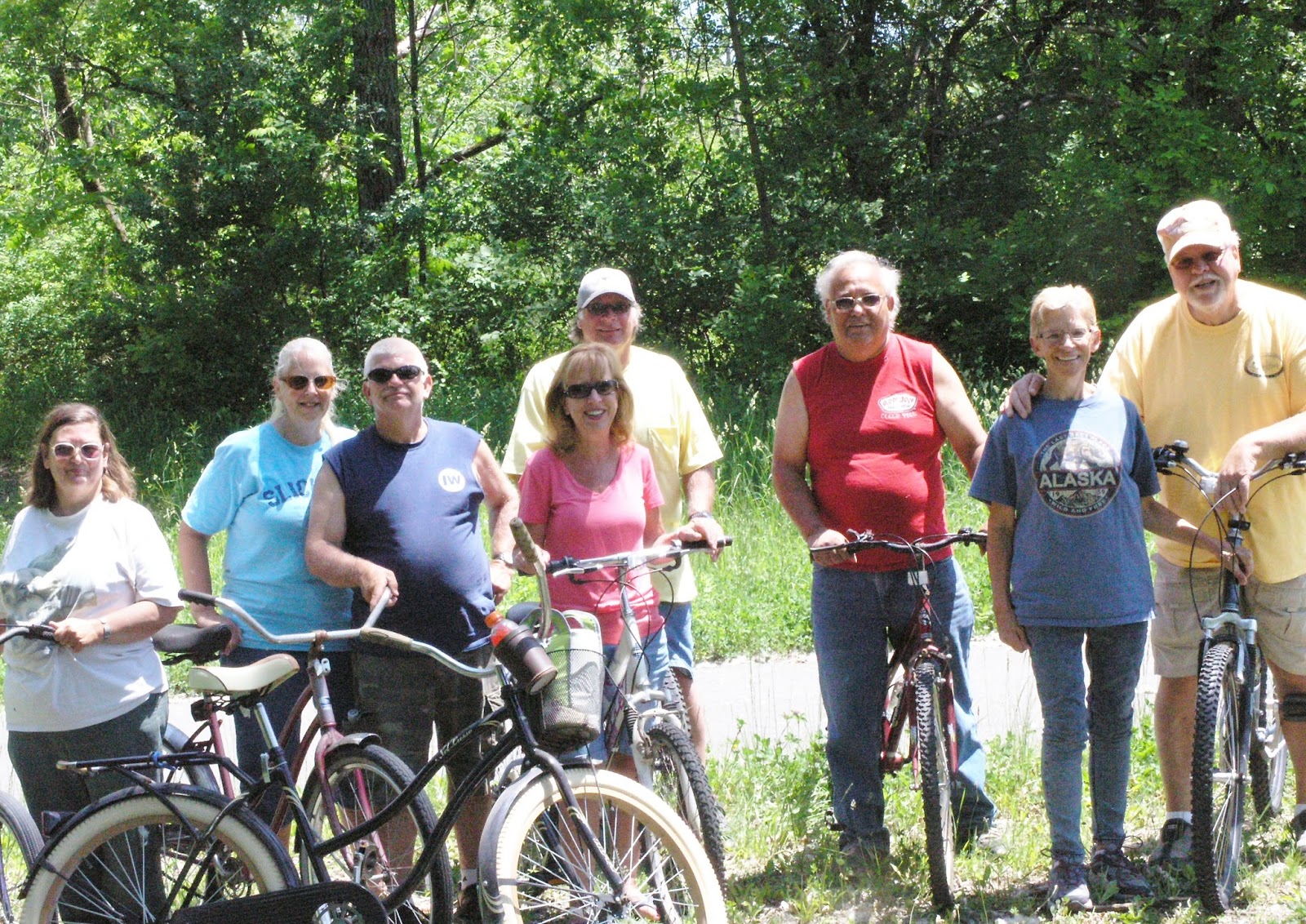
 As we have settled on site 45 for the remaining of the summer, we have been fortunate to befriend several neighboring campers and have begun an ease of friendship where we share a harmony of common camping stories, evening firelight around the campfire, and the pursuit of happiness of food, drink and leisure activities for the weekends.
One Sunday excursion we biked along “Clinton’s Ditch”, the engineering phenomenon of the 19th century.  Pedaling along the tow path of the Erie Canal you cannot help but conjure up visions tradesmen and families, whose lives evolved on floating houses, drifting along the waters from town to town.  As romanticized as it may sound, life on the canal was laden with difficult survival. A freight boat, most likely owned by a family, was probably captained by the father and the cooking for the family and crew overseen by the mother, while the children, if old enough, would walk alongside the mules on the towpath to keep their pace steady.  


Because of the transient nature of packet vessels, children were educated only as far as their parents’ knowledge. Other traffic on the canal included packet boats and passenger vessels, as well as tradesmen who encouraged travelers to contribute to the gambling crafts and their own personal coffers.  All along the canal on any given Saturday night there was sure to be altercations and the occasional canaller splashing into the canal after departing one of many taverns that lined the waterway. Ghost footprints from the 1820s spirited up through our bike spokes as we cycle over these tree-lined lanes while toads croak as our mile markers.  Our next excursion along the watered ditch we will plan with a picnic.

While the big rig rests under the shade of poplar trees our  Jeep becomes our mode of travel and we find ourselves dawdling through hamlets, villages and towns with no direction in mind, no clock to watch tick-tock, no plan to hold fast to.  One of the villages we are learning more about this year is Sylvan Beach and its surrounding region of Verona and Vienna, established as a strategic center during the French and Indian War. Oneida Lake is the centerpiece of Sylvan Beach and the territory was dominated by the Oneida Nation for thousands of years, as well as the nations of the Onondaga, Seneca, Cayuga and Mohawk.


Because of its location on the white-sanded shore of Oneida Lake, Sylvan Beach became a popular resort community during the late 1800s and early 1900s; respectable boarding houses, well-appointed hotels, cottages and restaurants were established by the late 1890s. Boardwalks, vaudeville, a carnival-like area that offered thrilling (at that time) roller coaster and carousel rides, trapeze artists, daredevil female high divers to woo the crowds with their abandonment of propriety. Similar to so many prominent lakefront communities across America, Sylvan Beach declined after the beginning of the 1920s. Those prestigious community leaders who had vision of grandeur and could gaze along an avenue and catch a glimpse of their imagination achieved soon died and the visions died as well. Sylvan Beach has been the subject in the past decade of ghost hunters who feel pretty positive of the significant incidents of paranormal sightings.  Perhaps the ghostly vestiges of those canellers who stepped over the water’s edge on those late Saturday evenings.


Today, as we walk along the beach and the side roads, there are ghost whispers of what once was a fashionable setting. Although most of the original buildings became victims of fire and deterioration, some of the amusement park still stands, albeit crookedly. The beach draws crowds of weekend boaters who dock along the canal and enthusiasts joining the muscle car buffs as they display their pristine rides, and craftspeople sharing their wares on the green. A sleepy little town during the week, Sylvan Beach becomes the reminiscent nostalgia of lifestyle and reflection of the past.

In our neck of the woods there is no shortage of eateries that complement the amount of legal tender in your pocket.  On Thursday evenings we find ourselves deckside at Crazy Clam in Sylvan Beach to appreciate their clams ‘n cans and receiving the service of their great waitstaff.   We have also feasted at Dinosaur Bar-B-Que, where we indulged on their award-winning bar-b-q and homemade corn bread. The atmosphere at Dinosaur is a blend of bikers, blue collar, and business suits. The unfortunate problem is parking on Syracuse surface streets; their parking meter system sucks! Just sayin’! 

We have dined at Cinderella’s, Eddie’s and the Pancake House, all in Sylvan Beach. Cinderella’s is the best outta three.  Farmer’s roadside stands are beginning to show up with fresh rhubarb and strawberries.  Cornfields for human consumption were being plowed and planted when we first arrived in May and look to be a few weeks shy of meeting the elephant’s eye on the fourth of July because of cool and wet weather, but we are looking forward to first harvest with a stick of butter and a pound of salt! And, of course, we stopped into Heid’s for a coney and Byrne Dairy chocolate milk.


beer du jour

wine du jour
Thursdays, Fridays, Saturdays and Sunday evenings we usually gather around a campfire and swap tall tales of camping woes and wonders and share the good, the bad and the ugly of camping.   And we all agree wholeheartedly, that camping is the best, no matter if tenting or glamping (glamorous camping) in a class A rig or 34’ fifth wheel. And we gather for "special" occasions - Saturdays- to share food and drink.

Life is Short - Enjoy the Ride

The weeks to come will be filled with more picnics, time with family and discovering, discovering, and more discovering


Monday, June 1, 2015

NBNC>NY 2015 May


May 7 -8

Appalachian Mountain Foothills (not my photo)
How many times have you read that message on your vehicle’s mirrors, “items appear closer than what they actually appear”? As we traveled highway 70 west out of New Bern to connect with I-795 to I-95 north for our summer trek to pitch our campsite near Sylvan Beach New York, the mirrors on our rig distanced the familiar landscape of our coastal Carolina as we mile  terrained toward the foothills of the Appalachian Mountain range. 

One of the great atlas’ we have is a topographic North Carolina map that details the back roads and country paths of our southern state. Snow Hill, on the Contentnea Creek, has as its city motto, “A Nice Place to Live”. This town, dating back to 1713 and only distancing a little over one square mile, is said to be a growing community, and its town name originates from the Tuscarora who lived on the creek and referred to the sandy banks of beach as snow. I would assume that if, and when, Snow Hill gets snow that their form of snow removal is to wait for July!

As we travel northbound on I-95, we are fortunate, from the riding height of our chairs, to see above and beyond the shrubbery and green space of the roadside, that we see acres and acres of solar farms. It seems that these massive farms, sans mooing, clucking and manure wagons, contribute substantially to local power grids.  Apple is planning to build a third solar farm near the center of the state to power its data center.  Sadly, it seems the family-owned farms seem to be vanishing along the countryside.  We have become so technologically advanced that the challenge of farming is becoming extinct. 

The rural landscape of the farm is becoming urbanized and its families are pushed into that urban lifestyle, as well because they cannot compete with large corporations and investment group.  Gone are the days of working hard planting and harvesting and then running to the pond or creek and wading in the clear waters while chasing tadpoles and eating peanut butter and strawberry jam sandwiches while waiting for the corn to grow.  


Nearing Roanoke Rapids and the Virginia state line in the distance we got a glimpse of Medoc mountain, that is a remnant of an Paleozoic age mountain range.

Traveling through the towering hardwood forests of Virginia and West Virginia light filters through branches overhead and the silence of the forest is broken only by bird songs.  The pastoral backdrop of Maryland and southern Pennsylvania with its valleys that resemble artichoke, asparagus, forest and moss green makes me want to hum the old folksong, “Shenandoah”. Okay, go ahead, hum a few bars and I’ll start you off with a few lines: O Shenandoah, I long to hear you; Away you rolling river; O Shenandoah, I long to hear you, Away, I’m bound away, ‘cross the wide Missouri”.  Keep reading as you hum this song for the next two weeks and wonder why it keeps replaying in your mind.  And I will apologize to you now.


After eleven hours on the road we pulled off to a Pennsylvania rest stop at exit 72 on I-81, north of Carlisle for the nite.


Friday, May 8

At 7:30 a.m. with the morning sun rising we hit the asphalt of I81 north. The mountain ranges along the Appalachian Trail are blanketed with eerie shrouds of early morning fog clouds.  As we near the coal region of Pennsylvania the forested mountainsides are budding into Spring; the reds of the trees remind me of bushel baskets of candied apples. As we drive past the fringes of metropolitan cities we a blessed to appreciate the forested valleys of rolling farmlands that reach up to the many mountaintop vistas.


Interstate 81 stays true to form, or should I say unformed, of being one of the roughest roads in the northeast to travel, whether you are going north or south.  In the motor home drawers were unlatched, cabinet doors swung open, cans of soup spilling onto the floor, and the rig was whimpering as it bounced over the frost heaves of the winter. 

We crossed the state line into New York about 10 a.m. and became absorbed in a lifetime of memories as we neared Syracuse and our homesite (until September) at Sylvan Beach. 


We leveled out on site 45 at Mayfair Campground, which is about five miles eastward from the touristy area of Sylvan Beach.  All plugged in, hydraulics down, time to push the button for the slide-outs. 

Wait, push the button again for the full-wall slide out. Okay, let’s not panic. Nope, nothing in the way, the other two slides out fine; push the button again. What the Hey!!!??? Slide inched out about to the length of our index finger and is stuck. Does not move in, does not move out. It acts like someone super-glues the upper right corner. Hello Camping World!!!!! 

Good Sam Club sends out a couple of good ol’ boys who seem to only know who to scratch their heads and wonder what they are supposed to do. In the meantime, phone calls placed to Tom Johnson where we bought the rig, and Camping World in Syracuse. Unfortunately, we are left to our own resources to come up with a plan. Fortunately, the RV tech who worked on our rig last year was staying a few sites from us and helped to narrow down the problem. After a few calls to Winnebago it seems that the mechanisms that control the slide have been sheared. An appointment for Camping World has been scheduled for Tuesday morning to diagnose and advise the plan. In the meantime, we are thankful that our journey was safe.

May 12
Today we took the rig to Camping World for an early morning appointment, and when we left at 3:15 in the afternoon, we returned to our campsite with our crippled motor home. Prognosis is hopeful. Complete mechanism has been ordered from Winnebago with the anticipated delivery in two weeks and repair to be completed within three days.  Although we are temporarily  inconvenienced we will make the best of it. 

Tuesday, April 21, 2015

New Year; New Rig; New Trips


Glazed tree in February


New 2015 Winnebago Adventurer
And the travels of DC and KC continue.  Following a five-month intermission from motor home travels and staying in New Bern for the winter duration, the bottoms of our feet started itching to stow the camping gear on the rig and head out to the black-topped ribbons of roadway.  


But first, a message from our sponsors: Tom Johnson Camping Center in Charlotte North Carolina.  Behind door number two is a brand new motor home! Yes, ladies and gentlemen in the audience, a 2015 Winnebago Adventurer, sitting on the tarvia just waiting for the Costello’s to find and claim as theirs.  


The Goodbye Girl-her last camping trip


We traveled to Charlotte the weekend of April 2nd through the 4th to introduce ourselves to the new rig and contribute to the coffers of local and federal institutions.  We returned the weekend of April 16th through 18th to deliver our trusty “old” rig for the new and improved rig.


 And now the countdown begins for our migration from south to north, where we will level down on site 45 at Mayfair Campground, near Sylvan Beach NY from May 8th through mid-September.  A segment of our lengthy visit will be a sojourn to GaspĂ© Quebec, by way of Boston-area and Bar Harbor Maine.


So, take a trip with us as we leave NBNC on May 7th and stop into our blog as we continue our traveling around, as we explore and re-explore.  Life is short; Enjoy the ride!

Saturday, September 13, 2014

FHRV Williamsburg 2014: September 7-14

Planning a visit to Williamsburg Virginia can be a daunting task; when you look at the blend of things to do, touristy and non-touristy influence, shopping selections to fill everyone’s needs and empty your pockets at the same time, the historical appeal and charm of the colonial tone in architecture and reenactment characters.

 Well, it felt like being the scarecrow at the crossroads, we just were not sure which way to go. So our pointed fingers aimed inward when we put the itinerary together so that each person joining the outing could fill in their days and evenings with their liking. And so, ten families of the Fairfield Harbour RV Club began their travel to Virginia to meet at the American Heritage RV Park for a week of laughter, food, drink and more laughter. As wagon masters, Dave and I leveled down on a corner lot that included a large patio, table, chairs and umbrella and fire pit. The site worked well as the host-spot for evening happy hours and after dinner campfires.

Unfortunately, Monday morning began with a continuous rain until mid-morning on Tuesday. Some campers weathered the precipitation and got soggy shoes, coats and umbrellas while ambling along the crushed-shell walkways of colonial Williamsburg. Several campers took to the outlet malls, while the remaining stayed warm and dry in their respective motor home or camper. A few of us gathered to meet for dinner at Bangkok Gardens, a local Thai restaurant. Due to wet chairs, wet wood and wet everything else, happy hour was postponed to the next scheduled dry evening.


Tuesday morning we were roused to the day with more precipitation having expected lakes outside our rigs because of the continuous downpour, but unhurriedly the skies began to clear, temperatures climbed a few degrees and it became tolerable toward the mid-afternoon. It did not take fellow rvers long to grab coats, umbrellas (for the anticipated return of fluid) and cameras and hit the roads to challenge cash registers along their way to our group dinner that evening in Colonial Williamsburg at Berret’s Restaurant. With cocktail hour underway we postured ourselves for the traditional group photo and then enjoyed Berret’s menu that included fresh seafood and cooked-to-order mignon, and the regional specialty of she-crab soup (sometimes it is best not to find out what is in the foods we eat!). After whimpering our way back to the campground because we are so sated, we enjoyed a pleasant campfire.


The remainder of the week everyone explored their preference of the many facets of Williamsburg, whether to walk near the footfalls of the first colonists of Jamestowne or listening to the intensity and passion of those who interpret and preserve the history of such noble historians such as Patrick Henry and Thomas Jefferson by breathing life into their historic words.
Each evening we gathered at site 38 for happy hour, where we shared our adventures of the day along with beverages and snacks, followed by evening campfires.


There are so many things to see and do in the area. Some days we just got in the Jeep and followed the colonial parkway to see where it would lead through the pine and hardwood forests. 

One of these days found us at the shoreline of the York River in Yorktown, where we sat on a shaded bench and watched the new class of Coast Guarders cast off for hands-on schooling and pondered the vastness of the Coleman Bridge, which spans the river to connect the tidewater areas of Virginia. This bridge is so massive its four-lane highway is the largest double-swing-span bridge in the United States. We meandered the bluffed streets of Yorktown, where there are limited reminders of its original position as a colonial hamlet. Yorktown suffered destruction from the Revolution and Civil Wars and a fire in the early 1800s that destroyed much of what remained. Unfortunately, Yorktown was not able to recover to its prosperous beginning but is once again showing its colors as the National Park Service has invested over 75 years of extraordinary effort to present and educate the public on the significance of this region in the founding and growth of our America.

There are so many various species of plant life in this tideland area. One is the BeautyBerry. It has the most interesting growing pattern. The tiny flowers become white blooms in the spring and then clusters of a purplish-red form berries in spheres on the branches of the plant.  One would assume the weight of these berries would crook the stem but they delicately spray the bough with simple elegance.


Saturday, August 16, 2014

NBNC>SYRNY: August 10 2014


How often do you have the opportunity to be sitting on a park bench in a stand of white cedars and gaze across a river and see another country? We had that chance during this week of August 10th. We have not visited the Falls in many, many years. Niagara Falls has been its consistent, spectacular self since the beginning of time; before Columbus discovered our eastern shores, before Moses parted the Red Sea, before Adam was created. The Niagara has thundered and roared. The area nearby in the historic park is being kept as natural as possible on the American border without becoming blatantly commercialized as the Canadian border appears to be. The once pleasant skyline of the Canadian side lended itself as a panoramic backdrop to the natural world, unfortunately, Canadian tourism industry has taken over the real estate along the Niagara River with restaurants, casinos, hotels and wax museums. It is sad to see. We ponder what the 1800s residents would think if they were to glance across the river now.


We began our leisurely stroll to the Prospect Point Observation Tower, built in 1961 and recently renovated in 2001. The 282 foot Tower extends out over the Niagara Gorge and gives unique and unobstructed views of the tumbling whitewater cascades of the American and Canadian Falls.  We did not go up into the tower because of the crowds but spent time on the platform leaning over the rails and looking down into the spiraling water and feeling the gentle mists of the American Falls.

We continued our stroll through the park that led us along paved walkways to a pedestrian bridge that goes over to Green Island. The original wooden bridge, built in early 1900, has been replaced with a sturdy cement bridge that crosses over the American rapids and then onto Goat Island. The newer pathway follows the serene Niagara River that intensifies its current leading to the American Falls.  
 
At the crest of the Falls we stood at the edge of the Bridal Veil Falls on Luna Island. Luna Island, all ¾ of an acre of it, is named so because lunar rainbows were seen over it on bright moonlit nights. Unfortunately, because of the nightly illumination of the Falls, moon rainbows are rarely seen today. Bridal Veil has a straight vertical fall of 78 feet and then continues its plunge onto the boulders into the Maid of the Mist pool that totals a181 foot drop.  From our vantage point we watched several tour boats, Maid of the Mist, depart from the Canadian side to pass by the American Falls and challenge the powerful current in the basin of Horseshoe Falls. These two double deck tour boats are each 80-feet, have two 350-horsepower engines that carry the 600-passenger vessels against the powerful current. The Maid of the Mist tours have been in operation for 150 years.

As we meandered Goat Island we were indulged with spectacular views of the Falls. We found ourselves in the middle of Goat Island and could hear the continuous roar of the falls but could not see its source. So we continued on until we began our downward trod to Terrapin Point, as close to the Horseshoe Falls as possible on the American side.  Terrapin Point at one time was a group of boulders that resembled giant tortoises. At first this area was accessible by footbridges to where a lighthouse sat until 1887 and was then closed due to its dangerous access. Watching the roaring thunder of the waterfall is spellbinding.  We wondered about the silence of the gorge if the water were to stop…in answer to this query we found an article that described an ice jam that dammed up at the mouth of Niagara River at Lake Erie in 1848. For nearly 40 hours the water over the Horseshoe and American Falls came to a trickle. Mills and factories that depended on the power of the water were suddenly quiet. The sound of the roar of thunderous water was silent. Some people were adventurous enough to get to the dried river bottom of the gorge and scavenged for things that had been at the bottom of the river for hundreds of years, even tomahawks, muskets and War of 1812 artifacts. While the river was quieted the crews of the Maid of the Mist even blasted away at riverbed boulders that hindered their navigation on the river. It must have been a quietness inside of quiet for those who lived near the Falls to have suddenly heard silence. To have not heard the echoing roar of the powerful force of water cascading hundreds of feet to the gorge must have been unnatural.  In 1953 and 1969 the Army Corps of Engineers intervened by building coffer dams to slow down the river’s flow to be able to study the erosion problems at the Fall’s edge.

It is tremendous to stand at the brink of this power, this intense energy, and have your senses explode with the sound of roaring thunder, the sight of millions of tons of water torrenting hundreds of feet downward, the feel of the cool mist across our faces.  The incredible volume of water never stops flowing. Incredible to think of this falling water and mist creating ice formations along the banks of the falls and river that become mounds of ice as thick as fifty feet. If the winter is cold for long enough, the ice will completely stretch across the river and form what is known as an ice bridge. This ice bridge can extend for several miles downriver until it reaches the area known as the lower rapids. Until 1912 visitors were allowed to actually walk out on the ice bridge and view the Falls from below. In 1888 a local newspaper reported that at least 20,000 people watched or tobogganed on the ice and shanties were selling liquor and photographs.  The adventure of being on an ice bridge was stopped in 1912 when the ice bridge broke up and three tourists died.

Incredible as well are those who challenge the Falls by pitching themselves over and downward. There have been, since 1901, fifteen people to dare survival of the Falls, on various flotation devices, some of which were no match for the power of the water, from barrels to kayaks to jet skis. Of these fifteen five died during their challenge. All daredevils challenged the Horseshoe Falls because of the treacherous rock formations at the base of the Americans.

We started our trek back, taking time to stop and take in the scenery, taking advantage of nicely placed park benches. And noticing that no matter where we were we could still hear the thunderous roar of the waterfalls.